Climbing
Night Owl
Purple · repeat-blooming · Zones 5-9
Bold stripes.
A red/white striped member of the grandiflora roses group, Rock & Roll is grown for its long succession of blooms and its fragrance. Below you'll find a full profile of Rock & Roll — its characteristics, how to grow it, where to use it in the garden, and answers to the questions gardeners ask most.
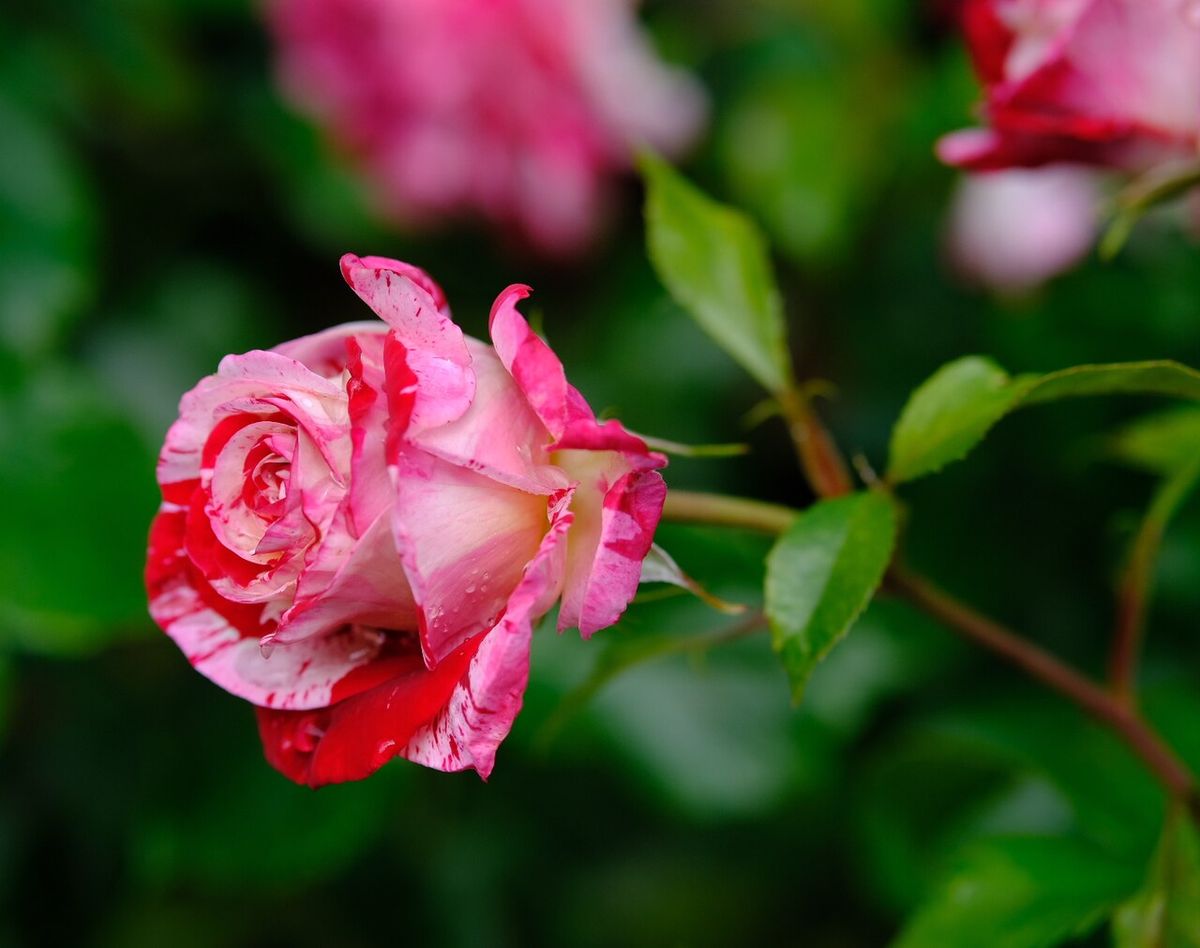
Photo: Nathan Williams, Portland Oregon (CC BY-SA 4.0) via Wikimedia Commons
As one of the grandiflora roses, Rock & Roll carries the traits gardeners look for in the group — shapely, high-centered blooms in small clusters. Its height and clustered, hybrid-tea-style blooms make the grandiflora a natural choice for the back of a border or a flowering screen.
In flower, Rock & Roll is red/white striped and fills the plant with bloom in wave after wave, carrying a strong, carrying fragrance. It is hardy across USDA zones 5-9, so it suits a wide range of gardens with the right seasonal care.
Rock & Roll was raised by Tom Carruth (Weeks Roses) in the United States and introduced in 2007. Further reading: Rock & Roll on Wikipedia.
Rock & Roll makes a tall, upright, vigorous bush, typically around 4 to 6 feet tall and 2 to 3 feet wide. The blooms are shapely, high-centered blooms in small clusters, large in size, set against semi-glossy green foliage. Knowing a rose's habit and mature size is the key to placing it well: give Rock & Roll room to reach its full spread without crowding its neighbors, which also keeps air moving through the plant and disease at bay.
Plant Rock & Roll where it will get at least six hours of direct sun a day in fertile, well-drained soil with good air movement around it. In cold climates, set the graft union — the swollen knob where the variety joins the rootstock — at or just below the soil line; in mild climates, keep it at soil level. Once planted, water deeply and less often to encourage deep, drought-resistant roots.
Rock & Roll suits the back of borders, flowering screens, and cutting. Set it at the back of a bed where its height is an asset, fronted by shorter roses or perennials. For more ideas, see our guide to companion plants for roses.
Treat it much like a hybrid tea, watching for black spot in humid climates. Watch for the usual rose troubles — black spot, powdery mildew, and aphids — and head them off with good air flow, base watering, and a tidy autumn clean-up. See our full guide to rose diseases and pests for identification and treatment.
Yes — Rock & Roll has a strong, carrying fragrance, and scent is one of the reasons to grow it.
Yes. Rock & Roll is a repeat-blooming rose that blooms in repeated flushes from late spring until the first frost, especially if it is deadheaded and fed through the summer.
Rock & Roll is hardy in USDA zones 5-9. That range describes the winter cold it can survive; gardeners colder than zone 5 should give it winter protection or grow it in a movable container.
Purple · repeat-blooming · Zones 5-9
Orange/bronze · repeat-blooming · Zones 6-9
Red/white · repeat-blooming · Zones 5-9
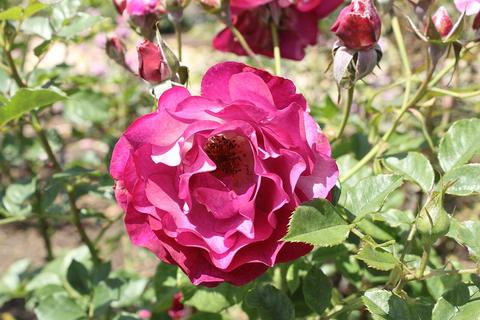
Purple · repeat-blooming · Zones 6-9
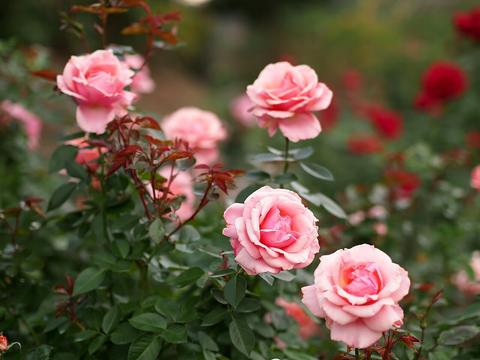
Pink · repeat-blooming · Zones 5-9
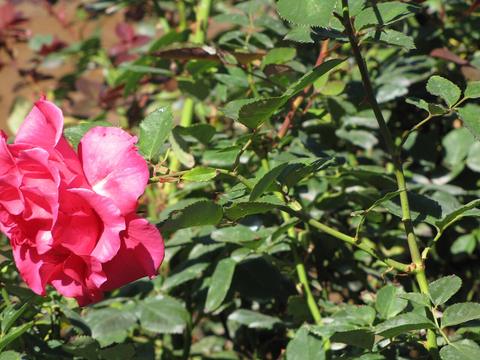
Deep pink · repeat-blooming · Zones 5-9