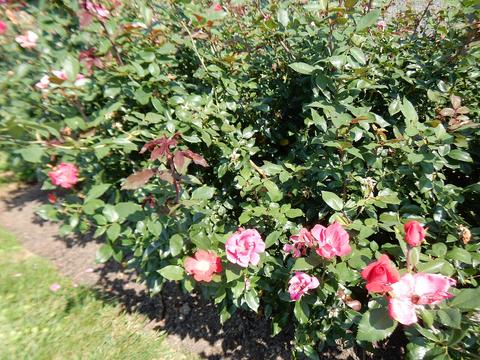
Knock Out
Knock Out
Cherry red · repeat-blooming · Zones 5-11
William Radler, an amateur breeder in Wisconsin, raised the Knock Out rose in his home garden. Introduced in 2000, it became the best-selling rose in North America and redefined the landscape rose as a plant that needs no spraying.
Radler was a parks director who bred roses as a hobby, with the stated goal of taking the work out of rose growing. He selected ruthlessly for disease resistance, going so far as to spread diseased leaves among his seedlings to expose them to black spot. A seedling from a 1989 cross stayed clean. Star Roses and Plants introduced it in 2000 as Knock Out, and it won that year's All-America Rose Selections award.
Sports and seedlings extended the range: Double Knock Out with fuller flowers, Pink, Blushing, Sunny (yellow, and the only fragrant one), White, Coral, and the dwarf Petite Knock Out. All share the same habit: rounded shrubs about 3 to 4 feet tall, flowering in cycles of five to six weeks from spring to frost, and dropping their spent blooms on their own.
Knock Out roses resist black spot, but they are not immune to everything. They are susceptible to rose rosette disease, a virus spread by a microscopic mite that causes distorted, reddened, excessively thorny growth and has no cure. Infected plants should be removed, roots and all. Mass plantings spread the disease more readily than mixed ones.
Cherry red · repeat-blooming · Zones 5-11
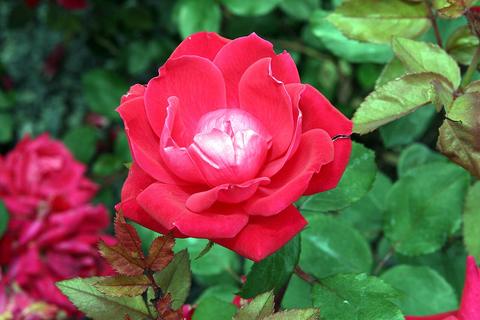
Cherry red · repeat-blooming · Zones 5-11
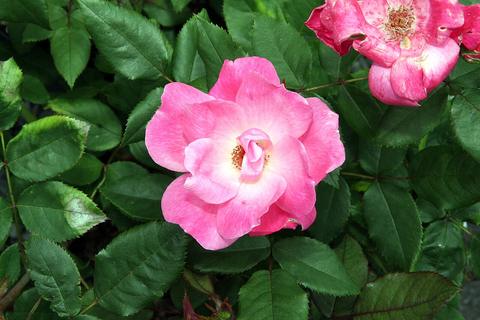
Pink · repeat-blooming · Zones 5-11
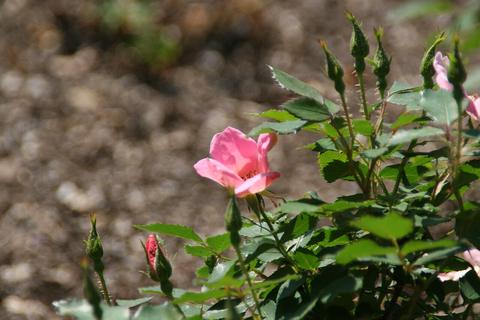
Coral pink · repeat-blooming · Zones 5-11
| Rose | Class | Color | Bloom | Fragrance | Zones | Introduced |
|---|---|---|---|---|---|---|
| Knock Out | Knock Out | Cherry red | Repeat | Mild | 5-11 | 2000 |
| Double Knock Out | Knock Out | Cherry red | Repeat | Mild | 5-11 | 2004 |
| Pink Knock Out | Knock Out | Pink | Repeat | Mild | 5-11 | 2005 |
| Rainbow Knock Out | Knock Out | Coral pink | Repeat | Mild | 5-11 | 2007 |
| Sunny Knock Out | Knock Out | Yellow | Repeat | Moderate | 5-11 | 2008 |
| Peachy Knock Out | Knock Out | Peach pink | Repeat | Mild | 5-10 | 2018 |